
Showing posts with label Travels in Israel. Show all posts
Showing posts with label Travels in Israel. Show all posts
Tuesday, April 18, 2017
The Magnificent Bahá'í Gardens of Akko, Israel
On the slopes of Mt. Carmel, overlooking Haifa Bay, is a small, but very impressive golden dome. This is the Shrine of the Bab, a mausoleum that is the second holiest Bahá'í site. Looking down from the scenic viewpoint on Yafe Nof Street you see the eighteen monumental terraces, the domed shrine, the lower city, the port, and the Mediterranean coast all the way north to Rosh Hanikra.

Thursday, February 16, 2017
Romantic Weekend in Israel’s other Walled Old City
We lift our glasses of champagne to toast the setting sun. The Mediterranean is golden, nearly wave free as evening falls. Framing our view are white roofs topped with solar panels and satellite dishes. We hear vendors’ cries from the alleyway below and the muezzin’s call from a nearby mosque. We drink our champagne as the sun dips into the magnificent sea.

We are in Acre (Akko in Hebrew), a small city located across the bay from Haifa. Our sunset view is from the rooftop of two ancient houses beautifully preserved, restored, and merged into the boutique Efendi Hotel. We are at the start of a romantic weekend, a gift in honor of our special birthdays this year from our family. We are eager to explore the wonders of this colorful old city.
We are in Acre (Akko in Hebrew), a small city located across the bay from Haifa. Our sunset view is from the rooftop of two ancient houses beautifully preserved, restored, and merged into the boutique Efendi Hotel. We are at the start of a romantic weekend, a gift in honor of our special birthdays this year from our family. We are eager to explore the wonders of this colorful old city.
Tuesday, July 28, 2015
This is Israel, in 60 Seconds
Have you been to Israel? Take a minute, just one minute, to get a quick view of what Israel is all about!
Israel - a modern country based on ancient history. Home to three of the world's major religions - this is the land where King David ruled, where Jesus preached, where the Crusaders waged their battles. Israel has sandy Mediterranean beaches, a ski resort on Mt. Hermon, and stunning deserts.
As the creators of this video state: "From parties to prayers, beaches to bicycles, visitors to Israel can look forward to an unforgettable experience… and great food.
Of course if you visit Israel, you'll see much, much more!
Israel - a modern country based on ancient history. Home to three of the world's major religions - this is the land where King David ruled, where Jesus preached, where the Crusaders waged their battles. Israel has sandy Mediterranean beaches, a ski resort on Mt. Hermon, and stunning deserts.
As the creators of this video state: "From parties to prayers, beaches to bicycles, visitors to Israel can look forward to an unforgettable experience… and great food.
Of course if you visit Israel, you'll see much, much more!
Friday, January 16, 2015
Dining with the Druze

The meal had started with a spread of sour labane cheese, zaatar salad, homegrown olives from the year's "good crop", creamy tehina, hummus with pine nuts, stuffed vine leaves, and Druze pita, which is flatter and thinner than pita bread available elsewhere in the country. The name of Halabi's restaurant—Misadat HaKeves—was quite fitting; it translates as The Sheep Restaurant.
 |
| Oven-baked lamb served with almonds, walnuts and rice |
"I've had this restaurant for 31 years," Mutkal told us. We were more interested in knowing how long he had been playing the oud—a musical instrument of the lute family common to Arab countries.
"I started playing the violin at the age of eight," he said. "I studied other musical instruments, including all kinds of flutes. I studied the oud for two years." Mutkal, we learned, earned a degree in music. He bought the oud in Jordan in 2001. Handmade in Syria, it cost $2,800 at the time. Today, it was priceless.
We had come for a weekend in the town, home to the largest community of Israel’s Druze, an Arabic-speaking religious minority that split from mainstream Islam during the 11th century. There are some 122,000 Druze living in Israel, and they live in the Galilee, on the Golan Heights, and in the mountains near Haifa. The Druze serve in the Israel Defense Forces and are Israeli citizens who, with the exception of some living near the Syrian border, dissociate themselves from Arab nationalism. They are very welcoming and hospitable, glad to have visitors in their communities.
 |
| Delicious hummus and creamy tehina |
And, Druze food is so good. On our first night we happened by chance on the Fakher el Deen restaurant, located in a residential neighborhood far from the main road that runs through the town. The chef/owner greeted us at the door and we sat down for some creative Druze fusion cooking.
The Chef's Salad was served hot, and contained a mixture of broccoli, mushrooms, tomatoes, onion, tehina, and sumac. The Chef's Shishlik was pieces of grilled chicken breast served on a bed of eggplant, tehina and tortilla. The restaurant had been open for a year and a half, the chef told us. We especially enjoyed the warm chestnuts served at the end of the meal.
 |
| The Chef's Shishlik |
Halabi seems to be a common Druze name, as in the center of Daliat-el-Carmel, all the storefronts bear that name. There is a Halabi Anter restaurant, where we dined on heart-shaped falafel and more of the creamy tehina, delicious hummus, and sweet stuffed cabbage and grape leaves. Next store is a tourist shop, operated by the Halabi Brothers. There are at least two dental surgeons and three lawyers with signs on doors advertising the name Halabi. In fact, the guest house where we stayed for two nights was owned and operated by Jamal Halabi.
 |
| Heart-shaped falafel |
Traditional attire for Druze men is the baggy pants called the shirwal. The more religious women cover their hair with a white al-mandīl—a transparent loose white veil.
On our final day in town we stopped at a roadside stand not far from the Muhraka Monastery, where according to the Carmelite Order that maintains the sacred spot, Prophet Elijah battled with the prophets of Ba’al.
 |
| Have some coffee! And sour labane cheese balls. |
"Have some coffee," our host said, pouring us each a small cup of the cardamom-flavored liquid. We sat with her and her husband, talking about life in Daliat al-Carmel. It turned out that the family lived on the same street where we had spent the night. Before we continued on our way, we purchased a jar of homemade labane, formed as semi-hard balls of the sour cheese floating in olive oil. We were glad to have a taste of Druze cuisine to take home with us.
Originally posted on The Huffington Post.
See also: Druze Villages on the Carmel.
Friday, June 13, 2014
How I Crashed Not One, But Three Eritrean Weddings

Ethiopia Street - a winding, picturesque lane that was once home to Eliezer Ben Yehuda, the man responsible for reviving the Hebrew language in the modern era. The main attraction on this lane is the Ethiopian Church, a walled compound built in stages between 1874 and 1901. At its center stands a round church, modeled on churches in Ethiopia.
My visit to the Ethiopian Church on a Saturday afternoon coincided with a wedding. No, not just one wedding, but three. And the wedding parties were not Ethiopian at all! The exquisitely attired brides and grooms were from Eritrea!
Where is Eritrea and what are throngs of young Eritreans wearing fancy clothing doing in an Ethiopian church in Jerusalem?
Friday, May 9, 2014
A Visit to Mount Zion

Mount Zion is regarded as the traditional site of King David's Tomb, as well as the room of the Last Supper. Surprisingly, the two are located in the same building, one flight of stairs apart.
A visit to Mount Zion is a serene escape from the hubbub of Old City tourism, although many pilgrim groups and visitors do come to see the holy sites on this hill.
Friday, April 4, 2014
A Walk North of the Old City of Jerusalem
 |
| Damascus Gate |
The solution to this is to continue to travel around Israel and learn even more about the country, its history and traditions.
This time my wife and I took a walk north of the Old City of Jerusalem, along Nablus Road in the eastern part of the city. This is the Arab, Palestinian half of Jerusalem, a bustling commercial hubbub rarely visited by Israelis, yet there is much to see, including a cave where many Christians believe Jesus was buried after his crucifixion.
Friday, March 28, 2014
Where Theodor Herzl Met Kaiser Wilhelm II
Tweet
 Mikve Israel was the first agricultural school established in Palestine. Located just north of the city of Holon, Mikve Israel played an important role in the story of Jewish settlement in Eretz Yisrael and in the development of agriculture in the country.
Theodor Herzl, born in Budapest in 1860, wrote of the agricultural possibilities available in the Jewish State he envisioned. In his book, Der Judenstaat (The Jewish State, 1896), Herzl wrote that "The poorest will go first to cultivate the soil... The labor expended on the land will enhance its value, and the Jews will soon perceive that a new and permanent sphere of operation is opening here."
In 1897, Herzl convened the first Zionist Congress in Basel, Switzerland. After the Congress, Herzl saw the need for encouragement by the great powers of the day. The Ottomans ruled in Palestine, so Herzl planned to meet with the Sultan. Another of the world's most influential powers was Germany, ruled by Kaiser Wilhelm II. Herzl had heard that the Kaiser was favorable to the idea of establishing a Jewish homeland in Palestine.
Herzl prepared to meet the Kaiser at the Mikve Israel school, which was on the road the Kaiser would take from his arrival in Jaffa to Jerusalem.
Theodor Herzl, born in Budapest in 1860, wrote of the agricultural possibilities available in the Jewish State he envisioned. In his book, Der Judenstaat (The Jewish State, 1896), Herzl wrote that "The poorest will go first to cultivate the soil... The labor expended on the land will enhance its value, and the Jews will soon perceive that a new and permanent sphere of operation is opening here."
In 1897, Herzl convened the first Zionist Congress in Basel, Switzerland. After the Congress, Herzl saw the need for encouragement by the great powers of the day. The Ottomans ruled in Palestine, so Herzl planned to meet with the Sultan. Another of the world's most influential powers was Germany, ruled by Kaiser Wilhelm II. Herzl had heard that the Kaiser was favorable to the idea of establishing a Jewish homeland in Palestine.
Herzl prepared to meet the Kaiser at the Mikve Israel school, which was on the road the Kaiser would take from his arrival in Jaffa to Jerusalem.
Saturday, March 15, 2014
A Taste of Bulgaria in Tel Aviv
Tweet
 The ancient port city of Yafo (Jaffa), mentioned in the Bible and conquered by Alexander the Great, Romans, Crusaders, Ottomans and Napolean, joined Tel Aviv as part of the same municipality, in 1950.
When the State of Israel was established in 1948, Yafo was a predominantly Arab city, but most of its 100,000 residents fled. Their place was taken by waves of new immigrants from Libya, Morocco, and other countries.
Nearly all of Bulgaria's Jewish community, which had survived the Holocaust intact, came to Israel in those years as well. Many of them made their homes in Yafo.
As part of our culinary tours of Tel Aviv, we had previously visited the Levinsky Street Market and the Yemenite Quarter, each with its own delicacies. This time, we took to the streets of Yafo. We particularly enjoyed the tastes of Bulgaria in Tel Aviv, as it brought back many fond memories of the two years we lived in Sofia.
When the State of Israel was established in 1948, Yafo was a predominantly Arab city, but most of its 100,000 residents fled. Their place was taken by waves of new immigrants from Libya, Morocco, and other countries.
Nearly all of Bulgaria's Jewish community, which had survived the Holocaust intact, came to Israel in those years as well. Many of them made their homes in Yafo.
As part of our culinary tours of Tel Aviv, we had previously visited the Levinsky Street Market and the Yemenite Quarter, each with its own delicacies. This time, we took to the streets of Yafo. We particularly enjoyed the tastes of Bulgaria in Tel Aviv, as it brought back many fond memories of the two years we lived in Sofia.
Friday, February 21, 2014
Coptic Christians in the Old City of Jerusalem
Tweet
 Who are the Copts? When walking the streets of Jerusalem's Old City, one comes across mysterious signs announcing the Coptic Orthodox Patriarchate but offering no clue who the Copts are.
The Coptic Orthodox Christians form one of the smallest Christian communities in Israel. There are only some 3,500 Copts in Jerusalem and Nazareth. In Egypt, where the Coptic Church originated and is based in the city of Alexandria, there are over 20 million adherents. The Coptic Church is actually one of the oldest in Israel.
My wife and I learned about the Copts as part of our tour of the "Minorities in the Old City of Jerusalem." The course was organized by Zman Eshkol, the leading operator of leisure studies in Israel.
The Coptic Orthodox Christians form one of the smallest Christian communities in Israel. There are only some 3,500 Copts in Jerusalem and Nazareth. In Egypt, where the Coptic Church originated and is based in the city of Alexandria, there are over 20 million adherents. The Coptic Church is actually one of the oldest in Israel.
My wife and I learned about the Copts as part of our tour of the "Minorities in the Old City of Jerusalem." The course was organized by Zman Eshkol, the leading operator of leisure studies in Israel.
Friday, February 14, 2014
Ethiopian Christians in the Old City of Jerusalem

My wife and I visited the Ethiopian Christian churches as part of our touring course on "Minorities in the Old City of Jerusalem." The course was organized by Zman Eshkol, the leading operator of leisure studies in Israel.
I took off my hat, we took off our shoes, and then walked into the Ethiopian Monastery Church, formerly a German nuns hostel. We would soon learn why we would were required to take off our shoes.
Monday, January 13, 2014
Tasting the Yemenite Quarter of Tel Aviv
Tweet
 Kerem Hateimanim, literally the Yemenite Vineyard, is an old neighborhood in central Tel Aviv, just off the busy Carmel Market. Once one of the city's poorest areas, Tel Aviv's Yemenite quarter is today enjoying a real estate boom; its picturesque streets are home to tasty Yemenite restaurants and even a boutique hotel.
My wife and I toured the Yemenite quarter on a course run by Zman Eshkol, the leading operator of leisure studies in Israel. Our guide is Or Rein.
The Carmel Market is an open air market where you can purchase fresh fruits, vegetables, household accessories, clothing, paper goods, music, candy, freshly baked bread and pastries, flowers, and much more. The market is particularly crowded on Fridays when shoppers are stocking up for Shabbat.
My wife and I toured the Yemenite quarter on a course run by Zman Eshkol, the leading operator of leisure studies in Israel. Our guide is Or Rein.
The Carmel Market is an open air market where you can purchase fresh fruits, vegetables, household accessories, clothing, paper goods, music, candy, freshly baked bread and pastries, flowers, and much more. The market is particularly crowded on Fridays when shoppers are stocking up for Shabbat.
Tuesday, January 7, 2014
The Dead Sea in Winter

But what is it like to visit the Dead Sea in winter, when storm clouds fill the sky with new shades of color, in sharp contrast with the salty green and white of the sea and the brown sands of the shore?
Friday, December 6, 2013
Masada - The Legend and the Truth

It was on Masada that a small garrison of Jewish rebels held out against the Roman conquest in the year 73 CE. Three years after the Temple in Jerusalem had been destroyed, Eleazar Ben Ya'ir and some 960 others of the Sicarii Zealots resisted the siege of Roman governor Flavius Silva and the mighty Tenth Legion of the most powerful army on earth.
Rather than allow themselves to be captured and taken off into slavery in the far reaches of the Roman Empire, the Zealots decided that it was better to die at their own hands as free men. After listening to an impassioned speech by Ben Ya'ir, the Zealots drew lots and then took their own lives.
This makes for an amazing story, something that still resonates in Israel today when new army recruits swear in with the vow, "Masada will never fall again". But how much of the Masada story is actually true?
Sunday, November 24, 2013
Catholics in the Holy City of Jerusalem
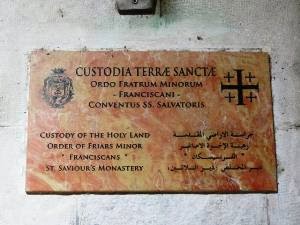
My wife and I signed up for a four-session touring course on "Minorities in the Old City of Jerusalem" and the first visit was to the Christian Quarter, to learn about the role the Catholics play in the Holy City. The tour had been organized by Zman Eshkol, the leading operator of leisure studies in Israel, and our guide for the day is Esther Sa'ad.
Saturday, November 16, 2013
The Tastes and Colors of South Tel Aviv

My wife and I signed up for a three-part visit to the markets of Tel Aviv, with a focus on the special tastes and foods available. The course is run by Zman Eshkol, the leading operator of leisure studies in Israel, and our guide for the day is the very knowledgeable Or Rein.
The tour starts at the iconic Shalom Tower, once the highest skyscraper in the entire Middle East. Let's step inside for a little bit of history about Tel Aviv's origins, and then we'll begin tasting the special foods that Tel Aviv has to offer.
Sunday, October 27, 2013
A Mosque, a Synagogue, and a Church

This past weekend, we vacationed in Israel's north, traveling around the Galilee and taking in the rolling hills, the pastures full of grazing cattle, the neat rows of vineyards, and the picturesque communities. We walked through the artist colony of Tzfat (the mystical city of Kabbalistic Judaism also known as Safed), and visited the renovated historic village of Rosh Pina.
We drove north, toward Israel's border with Lebanon. Here the scenery was even more beautiful, full of dark green forested valleys. We had never traveled these northern roads before and every turn exposed us to new vistas. Our journey on the cloudless October day would take us to see a mosque, a synagogue, and a church - three houses of worship quite unlike those we had seen in the past.
Sunday, October 13, 2013
A Taste of Coexistence at the Majda Restaurant
A restaurant in the village of Ein Rafa played host to celebrity travel chef Anthony Bourdain. My friends and I dined there on tasty food that was a fusion of cultures.
 Bourdain's recent broadcast from Jerusalem of 'Parts Unknown' on CNN received some flack due to its purported Palestinian bias. Bourdain opened the show by acknowledging that his visit would be seen by many "as a terrorist sympathizer, a Zionist tool, a self-hating Jew, an apologist for American imperialism, an Orientalist, socialist, a fascist, CIA agent, and worse." But, putting politics aside, the travel chef treated viewers to the tastes and culture of Israel and the Palestinian territories.
Highlighted on the show was a visit with a mixed-marriage couple who run a restaurant in the village of Ein Rafa. As he ate outdoors, Bourdain talked with the owners, Michal and Yakub. The food looked so good that it resulted in an intense desire on my part to dine at this unusual restaurant, whose name is Majda.

Highlighted on the show was a visit with a mixed-marriage couple who run a restaurant in the village of Ein Rafa. As he ate outdoors, Bourdain talked with the owners, Michal and Yakub. The food looked so good that it resulted in an intense desire on my part to dine at this unusual restaurant, whose name is Majda.
Friday, September 27, 2013
A Day at the Beach in Tel Aviv
Tweet
 What's the weather like in your part of the world? Here in Israel, late September is one of the best times of the year. The skies are bright blue, the days are pleasantly warm, and the evenings are cool and refreshing. We've already had our first rain of the season, but there is still plenty of time to enjoy the wonderful weather.
My wife and I headed off yesterday for a day at the beach. Tel Aviv has about 14 kilometers (9 miles) of Mediterranean beachfront, with promenades, sandy beaches, numerous cafes and restaurants, fancy hotels, and endless blue horizons. We usually head to the Charles Clore Beach in the south, mainly because of its close proximity to Jaffa (Yafo),with its Biblical connections and historic port.
Also known as the Dolphinarium Beach, for the dolphin tank and nightclub that once stood at the site, the Charles Clore Beach is a comfortable place to relax in the sun. We left our home in the Judean Hills and the drive took us 35 minutes (because there was no traffic on the holiday). When we go to the beach we go early in the morning, to ensure getting a good parking spot across the street from the beach and a spot in the shade.
My wife and I headed off yesterday for a day at the beach. Tel Aviv has about 14 kilometers (9 miles) of Mediterranean beachfront, with promenades, sandy beaches, numerous cafes and restaurants, fancy hotels, and endless blue horizons. We usually head to the Charles Clore Beach in the south, mainly because of its close proximity to Jaffa (Yafo),with its Biblical connections and historic port.
Also known as the Dolphinarium Beach, for the dolphin tank and nightclub that once stood at the site, the Charles Clore Beach is a comfortable place to relax in the sun. We left our home in the Judean Hills and the drive took us 35 minutes (because there was no traffic on the holiday). When we go to the beach we go early in the morning, to ensure getting a good parking spot across the street from the beach and a spot in the shade.
Thursday, August 22, 2013
The Gates of Jerusalem
 |
| Jaffa Gate |
A small, walled area in the center of Jerusalem contains holy sites revered by followers of the three major monotheistic religions. The Temple Mount, where the First and Second Temples once stood, is now home to the Dome of the Rock and the Al-Aqsa Mosque. The retaining wall of the Temple Mount is known as the Western Wall (formerly the Wailing Wall) and it is the largest outdoor synagogue in the world. And Jesus walked along the Via Dolorosa carrying his cross to his crucifixion. The Church of the Holy Sepulchre is considered by many Christians to be where Jesus was buried and the purported site of his resurrection.
The Old City of Jerusalem is without a doubt the most colorful tourist destination in Israel. The narrow passageways of the Arab shuk. The modern housing and reconstructed synagogues of the Jewish Quarter. The wide Cardo street passing on the very stones put into place by the Roman conquerors of the city. The many restaurants, the yeshivot schools, the carcasses of animals hanging from their hooks in tourists' faces, the carpets and olive wood souvenirs in the Christian Quarter. No one can understand Jerusalem's uniqueness without a visit to the Old City.
While people have lived in this area of Jerusalem since early Biblical times, the current walls were constructed in 1538 by Suleiman the Magnificent, Sultan of the Ottoman Empire. Legend says that Suleiman's architects mistakenly left Mt. Zion outside the city walls. Mt. Zion is revered as the traditional location of the Last Supper and the burial site of King David.
Join me on a colorful virtual tour of the gates of the Old City. And then visit Jerusalem to see them yourself!
Subscribe to:
Posts (Atom)